Friday, December 26, 2014

Christmas 2014

I contemplated the muddy waters of the Potomac
The wrinkles the wind blew
I felt the vacuum
The emptiness within
And wondered whether
A soul could fill a torn envelope
Whether the tears could mend
Again and whether so many patches on life
hardened the heart
Or whether it was about to give up
Leave Die Live a little longer
But how much more can a little longer be
Before the end.

December 25, 2014

© Sarah Diligenti

Sunday, June 22, 2014

What's In A Name?

I am standing at the cashier counter in my favorite shop, Red Orchard, Wildwood Manor, Bethesda (The place is a real heaven on earth for unique gifts.) With the new Square system, the owner asks me if I want my receipt emailed to me, to which I heartily agree: the fewer trees we cut the better; the less BPA on credit card receipts, even better!

Upon hearing my last name “Diligenti”, he asked: “Does it mean the same as in English: “diligent”?” “Absolutely! It comes from the Latin: diligentia, ae…. Which means “haste”.” “And are you “diligent”?” “As a matter of fact, I am.”  Then I said: “It is my maiden name. Because you see, with my married name, I had too much trouble. It is rather difficult to carry around the last name: “Pickup”. You do not know all that I had to endure!” “Your husband’s name is Pickup?” “Yes! A British name… So imagine me on the phone and being asked to spell my name, and I usually say: “Pickup, just like the truck.” At this time, he and his wife started to giggle….

So I went on: “20 years ago, going to the dry cleaners or the photographer’s, whenever they asked for my name and I replied “pickup”, they would say: “yes, we know you are here to pick up stuff, but what is your last name?” My adrenaline usually went up at this stage. But the worst part happened when I went to renew my driving-license. I asked for my maiden name to be added next to my married name. This woman berated me for 30 minutes, telling me I should be ashamed of myself for not wanting my husband’s name, that a wife should always be proud of her husband’s name, and so on and so forth… I tersely replied to her that if she had been called a pickup, she would probably want to change her name too. Especially considering that one time when, after hearing my last name, a guy asked me how would I like to be picked up?” 

By this stage, the owner of Red Orchard and his wife were laughing out loud. I added: “And when I had to go to the main MVA for a car tag a few years later, they asked me for my ID and then told me it was not good… The woman at the driving-license renewal booth had hated me so much for not just using my husband’s name that she had NOT put the three digital numbers along my throat on the picture ID! So for a few years I was unaware that I was driving around with a totally not legit ID!” “OMG! She did not!!! You should have filed a complaint!” “Well, she was looking like she was way over 70 at the time so I gathered she had probably retired, but I must say after all these years I am still wondering what’s in a name that people react so strongly… But at least it does make for an entertaining story…”


Little do they know that my maiden name itself had been the butt of many a joke when I was growing up in France…

Sunday, January 12, 2014

Surviving in the Siberian Wilderness for 70 Years (Full Length)

The incredible story of Agafia Lykov and the Lykov family, in the Siberian taiga, 150 miles South of the city of Akaban.
The Lykovs voluntarily disappeared out of the known world in between 1936 and 1942, at a time of tumult in the former USSR: Stalin's purges and the Nazi invasion that ended with USSR's participation in World War 2 and the Cold War.
The Lykovs had been fleeing East since 1653. They are "Old-Believers", Orthodox deemed heretics by Alexey Romanov (the first tsar of the dynasty) and Patriarch Nikon who wanted to reform the Orthodox Church by returning to the Greek texts, whose many translations since the Baptism of Kievian Rus in 988, had suffered many incoherences. Alexey and then his son, Peter the Great, persecuted the Old Believers, boyars and peasants alike, at best forcing them into exile or cutting their sacred long beards, at worst executing them.
The Lykovs fled East like many other Old-Believers, and eventually disappeared in the taiga to be found again totally unexpectedly by geologists in... 1978. In 1982, a journalist from the Komsomolskaya Pravda, the late Vassili Peskov, started to write a few articles about the two surviving members of the family: Karp Ossipovitch and his daughter Agafia. The mother, Akulina, had died back in 1961, the result of a famine and of self-sacrifice to ensure the survial of her four children. The two sons, Dmitri and Savvine and the other daughter, Natalia, died between 1978 and 1981, and to this day one does not know whether it was the encounter with the geologists and therefore the potential exposure to unknown microbes that may have precipitated their demise, like what happened to the Native-Americans when they first met the White Explorers.
Karp Ossipovitch died of old age in his 80s and his daughter, Agafia, is now 70. She still lives in the wilderness, but she has made concessions to "the century". One of the earlier geologists who helped her family, Erofei, now a victim of post-sovietization and a leg amputee, lives on the estate with her. Relationships between the two friends are not as amiable as they were when Erofei was a foreman, as the documentary reveals.
Vassili Peskov fell sick in 2010 and died in 2013. His articles were compiled into 2 books, Lost in the Taiga and News from Agafia, covering 1982 -his first visit to the hermitage- to 2009. I highly recommend reading them, even before watching the 2013 documentary. I am not sure what to make of Agafia's surprising revelations regarding Erofei's behavior, especially in the light of all he had done for her before joining her in the taiga as an amputee. Is Agafia telling the truth or is she not?
A full review of the two books appear, in French, on my other blog:  Exercices de Plume:
http://exercicesdeplume.blogspot.com/2014/01/des-ermites-dans-la-taiga-des-nouvelles.html

Saturday, March 23, 2013

Shostakovich, Symphony #11: The Year 1905

Tonight's performance at Strathmore Hall was quite a treat. The Baltimore Symphony Orchestra, conducted by guest conductor Dima Slobodeniouk (who was debuting with the BSO) played Shostakovich's Symphony #11, also known as The Year 1905.

The first part of the Concert (Rachmaninoff's The Rock followed by his Piano Concerto #4, with Macedonian pianist Simon Trpceski) was just a warm-up to the impressive second part. The audience barely applauded at the end of The Rock. Rachmaninoff's First Movement of his Piano Concerto #4 proved a little bit difficult for the pianist, but his interpretation of the Second Movement was full of emotion.

This young Macedonian pianist got the audience when he came back on stage for an unscheduled "encore", a small piece that he wrote at 7... A little waltz with a touch of Slavic soul.

But the heart of the concert was truly Shostakovich's Symphony. The First Movement built up slowly with the cellos, the altos and the violins, sustained softly by the harp and the percussion. The presence of the martial undertone throughout the symphony -thanks to the many percussion instruments and to the brass- kept the memory of the bloody events of the year 1905 alive, and is truly an homage to those who died on that fatal Sunday.

I guess that is why the audience, still under the shock of such a non conventional piece, -certainly not the typical classical piece the American public is used to-, was a little "late" in realizing the Symphony had ended.  It took a good 30 to 45 seconds before they started to clap.

Dima Slobodoniouk's debut at BSO will be remembered. And I hope he will be back next year with more surprises.

And for your pleasure, I am posting a YouTube link to that Symphony, played by the Netherlands Philarmonic Orchestra at the Concertgebouw in Amsterdam, on January 14, 2008. Directed by Jakov Kreizberg.

Shostakovich's Symphony #11, The Year 1905


Monday, December 24, 2012

December 24, 2012: Universal Prayer


In your universal prayers tonight, please do not forget:

the homeless and the destitute, 
the sick, the invalid and the victims of accidents,
the poor and the famished;
those who suffer in their flesh or battle with their spirit,
those whose souls have left us and those who mourn them,
those whose soul struggles with pain and lack of love, 
those who thirst after justice and liberty,
the victims of war, civil war, rape, ethnic cleansing, domestic violence, emotional/psychological or physical/sexual abuse; 
those who give their life to help humanity, 
the doctors, the nurses, and the caretakers,
the educators, the comforters and the peacemakers;
the victims of modern slavery,
the victims of political dissent,
the political prisoners, especially in Iran;
the children of Syria and of the Middle East;
the children of Africa, especially those in Mali, the Congo and Somalia;
the children of Asia, especially in Tibet, and the children of Central Asia, especially in Afghanistan;
the children of Europe, especially those who suffer first and foremost the consequences of the economic crisis in Greece;
the children of Russia, especially those who suffer from Putin's yoke;
the children of America, and especially those from Aurora, Co; Newton, Ct; Southeast and Northeast DC; South Side, Chicago;
those who suffer from the effects of climate change.

And if I have forgotten anyone, please add them in a comment under this post and add them to your prayers too.

Sunday, June 12, 2011

A Literary Treatment of Russia, Part 2

Beyond the Romanov tragedy and beyond the Soviet Union itself, “the Great Patriotic War” as Russians call World War 2, remains –to this day- at the core of Russianness. Every time the Motherland is in danger, Russians stand as one man and Staline even called back those whom he had not killed but only sent to the Goulag at the end of the 1930s, to fight against the Nazis, appealing to their love for Mother Russia. The narrator in David Chenioff ‘s City of Thieves (who was the author’s grand-father), and whose own father was “purged” by Stalin, explains this : “I have never been much of a patriot. My father would not have allowed such a thing while he lived, and his death insured that his wish was carried out. Piter* commanded far more affection and loyalty from me than the nation as a whole. But that night, running across the unplowed fields of winter wheat, with the Fascist invaders behind us and the dark Russian woods before us, I felt a surge of pure love for my country.”


Amongst the most famous episodes of World War 2 on the Soviet front, the siege of Leningrad may be the horrific climax of what humans can do to each other. David Chenioff’s City of Thieves exposes these atrocities and at the same time manages to keep humor alive. It is a well-known fact that the besieged city’s only chance of survival once the horses, dogs, cats and rats had been eaten was cannibalism. In the especially cold winters of that siege, people started eating the corpses. On some streets, survivors’ gangs even ambushed, slaughtered and cut famished passers-by up into pieces: pieces to be sold, boiled, grilled… eaten. Lev, the orphaned narrator, and Kolya, the young soldier who will become his best friend, take all this in stride and as much as Lev’s encounter with cannibals is as horrific as can be, “Cannibals and Nazis didn't make Kolya nervous, but the threat of embarrassment did-the possibility that a stranger might laugh at the lines he'd written.”  This is a coming of age novel, a story of war and its atrocities, but also a story of friendship and love. Kolya dies of a gunshot wound and as he bleeds to death, he still laughs at the fact that he was shot in the buttocks. His charm and charisma will live forever in the narrator’s memory, allowing him to survive the rest of the war, marry the woman he also met during that frightful episode and move to the United States.

When the Iron Curtain was raised and Communism fell, a new wave of Russian immigrants scattered in Western Europe. Not all were nouveaux riches living the celebrity life on the Riviera. A great majority was fleeing the economic upheaval that followed the end of the Marxist-oriented regime of production. Suddenly old pensioners discovered that their monthly retirement was the equivalent of a mere $130.00; middle-aged professionals realized that their careers would never blossom and younger people foud out that with the end of the authoritarian regime, they were left out with no directions whatsoever except for alcoholism and the drugs brought in by the Afghanistan war. A lot of Jews also fled the broken USSR, able to use their Germanic-sounding names to find refuge away from the rise of anti-Semitism in the new born Russia. Alina Bronsky’s Broken Glass Park, is another coming of age novel, of a young Russian Jewish teenager, Sascha Naimann, whose mother moved from Moscow to Berlin, Germany, when she was in elementary school. We know nothing about Sascha’s dad, except that he may have been a famous person. All we know is that Sascha has two siblings from her mom’s second marriage and that her husband, Sascha’s stepfather, violently murdered her and her companion. Vadim is arrested, put in jail but still manages to play games with Sascha’s mind. A young intern journalist interviews him in jail and he pretends that “remorse tears at my heart”. Later on, Vadim dies in jail, in obscure circumstances, stealing Sascha’s vindictive plan: she had intended to kill him herself.
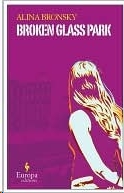
Sascha’s quest for normalcy is encumbered by what makes an immigrant’s life difficult: prejudices (“I’m sick of having to explain everything from scratch (…) how come I speak German so well – ten times better than all the other Russian Germans put together”), loneliness, elders who cannot help because they do not know how to navigate the system or speak the language (“After almost two years here, Maria’s German is limited to about twenty words, things like bus, potato, butter, trash, boil, wash, and fuck you (…). Occasionally she tries to group her vocabulary into sentences. That usually doesn’t go too well. When she’s shopping anywhere but the Russian grocery store, she has to point to whatever she wants (…). I tried for two weeks to help her master the sentence “I only speak Russian”. She carries it around on a slip of paper in her wallet, transcribed phonetically into Cyrillic letters," lack of opportunity which leads the immigrant youth towards crime.

Sascha stands out in her Russian immigrant community, because she is an orphan, because her mother was murdered (and the Russians being superstitious, she is confronted to even more prejudice instead of being surrounded by love and compassion), and because she is really smart. Sascha becomes the bridge between the native Germans and the “Ghetto Russians”. She will meet Volker the editor of the daily paper that published Vadim’s interview and his sickly son, Felix. Her relationship with Volker is one of the troubling elements of the book .Is it pity for Felix or a normal teenager’s attraction that makes her enter into a sexual relationship with him? When she then makes love with Volker, is it an unconscious search for a father figure? And what is this other Volker, the young 24 year old Nationalist Party member she hands to the Russian youth in Broken Glass Park? Is he supposed to be representing the dark side of Volker the editor in chief? Or should the reader take to heart what she says at the beginning of the book: “I hate men”, because in truth all the men in her life have been bastards?

Broken Glass Park is a coup de maître for a first novel, a book that will not leave the reader indifferent. Sascha’s narrative voice brings out all the complex feelings a teenager exhibits: her life experiences may be more dramatic than the average teenager’s but her internal turmoil is the same, alternating between despair, love for her traumatized siblings, sarcastic humor to survive violence and her mom’s death and keeping dreams alive. My own 16 year old daughter (not an avid reader) devoured it in a week, and THAT is proof enough for me.


* Piter: is the nickname Russians gave to Leningrad. Leningrad was originally St Petersburg, then became Petrograd (Russianized version) at the beginning of World War 1, because the original name sounded too Germanic and the German Empire was the enemy. With Communism's personality cult rising, it became Leningrad (after all Lenin started the Revolution there), even though it was ripped off its "capital city" status (Moscow became again the Capital as it had been until Peter the Great). Piter was the affectionate nickname many Peterburgians used rather than the official Leningrad, a subtle way of rebelling against the regime....

Monday, February 28, 2011

A Literary Treatment of Russia: Part One

Russia has fascinated writers from times immemorial.
Voltaire exchanged quite a copious correspondence with Catherine the Great, whom he called the “Semiramis of the North” and whose authoritarian style he celebrated as much as he admired her war on the Turks.
The Marquis de Custine, a French aristocrat who took to literature and travel to escape scandals, wrote a travelogue in letters, a sort of hybrid of Tocqueville and Montesquieu, called Lettres de Russie. His fascination with the country is comingled with criticism: “Whenever your son is discontented in France, I have a simple remedy: tell him to go to Russia. The journey is beneficial for any foreigner, for whoever has properly experienced that country will be happy to live anywhere else.” He is considered as having more or less predicted the Revolution and beyond: “One day, the sleeping giant will rise and violence end the tyranny of words. Then, equality distraught will summon the old aristocracy in the defense of freedom, only to find that a neglected weapon, raised too late in too idle hands, has lost its strength.”

21st century writers also fall for Russia. The last four books I read gave me an even bigger appreciation of the phenomenon since out of the four authors, two are not Russians: Sam Eastland and James Meek (but Meek has lived in USSR and then the new Russia), David Benioff has a Russian grandfather and the last one, Alina Bronsky, is a Russian “émigré” of the most recent Western Europe-bound immigration wave after the fall of Communism.

Sam Eastland and James Meek tackle the first part of the XX century in USSR. The most fascinating story within Russian history remains the Romanov Drama. Murdered by the Bolsheviks, the Imperial Family laid in the depth of a mining well somewhere outside Ekaterinenburg for decades. Until they were finally unearthed and identified thanks to DNA after the fall of communism, one was never sure of what had really happened to them, especially to the youngest children, Anastasia and the hemophiliac heir to the throne, Alexei Nicolaievitch.

Sam Eastland is of course aware of the latest developments but still manages to keep the reader alert as to what and how it all really happened. His first historical police thriller, The Eye of the Red Tsar, is a page turner, with the unforgettable figure of the Finnish Inspector Pekkala. Incorruptible “Emerald Eye” of the late Nicolai 2, "a man who could not be threatened or beaten or corrupted into surrendering his sense of what was right or wrong", at the beginning of the story - in 1929- Keppala is exiled in the Gulag and is brought back to civilization by a young commissar, on Stalin’s orders. Stalin is the Red Tsar and he only fears one person, Keppala. The structure of the book, with alternating chapters that tell the reader about Keppala’s past as the second son of a Finnish undertaker and as the “Emerald Eye” while the plot develops around a potential survivor of the Ekaterinenburg massacre, makes for an entertaining read. However, I doubt Sam Eastland’s writing style will ever attain the depth and the elegance of Russian author, Boris Akunin, whose heroic policeman Erast Fandorin remains one of my favorites. The problem lies probably in the fact that Sam Eastland does not master Russian Literature and History as much as native Bakunin (whose real name is Grigory Chkhartishvili.) This latter author's pseudonym pun on celebrated anarchist Bakunin -in his use of the initial B.(for Boris) Akunin- already informs the reader of more delectable literary and culturally connected surprises to come.

In that respect, James Meek’s The People’s Act of Love is a superbly written book, a strong book, a book set in the past – 1919 in USSR, at the time of the Civil War in Siberia- but that is at the same time very contemporary in its writing. The author focuses exclusively on place, characters and storyline. And what a storyline: the convergence of four principal characters, Anna, Samarin, Balashov and Mutz, each with a different point of view, at a time when the world was taking a new shape! Anna “did not believe in new worlds, but she could not help wanting to be with men and women who did.” Samarin, an escaped political prisoner, [calls himself] “the destruction (…) of everything that stands in the way of the happiness of the people who will be born after I'm dead. (…) A manifestation. Of present anger and future love.” The Christian mystic Balashov leads a sect that is seeking paradise on earth through castration and Mutz, a junior officer of the Czech Legion, simply wants to leave Siberia taking Anna with him. I will not reveal all the twists and turns of this fabulous novel, but cannot help but ask myself the following question: what constitutes a people’s act of love? Is it an act of self-sacrifice to protect the living or an act of destruction, annihilation, for the benefit of future generations? I read this book when it was released in 2005 and am still overwhelmed by it. I also just found out that Johnny Depp bought the rights to produce a movie based on the book. I am both anxious to see it and concerned that the cinematographic treatment of this masterpiece may leave out some of its essence.


To be continued: David Benioff, City of Thieves and Alina Bronsky, Broken Glass Park